
Vietnam Sourcing: What Companies Should Know Before Working With Vietnam Suppliers
Companies exploring new supply chains often discover that identifying a manufacturer is not the hardest part of the process. Understanding how the Vietnam sourcing market actually operates on the ground is where the most severe operational challenges begin.
The industrial landscape here has expanded rapidly, transitioning into a highly capable Vietnam manufacturing hub for global brands. However, many international procurement teams still struggle with supplier verification, production visibility, communication alignment, and quality consistency when executing their procurement strategies remotely. The rules of engagement here differ significantly from legacy supply chains.

If your team is evaluating new manufacturing partners, understanding the intricacies of Vietnam sourcing can reduce costly mistakes before mass production even begins. This comprehensive guide breaks down the actual friction points of the ecosystem and provides executive frameworks to navigate them successfully.
Understanding How the Vietnam Sourcing Market Operates
To succeed here, you must look past macro-level growth statistics. You need to understand the structural and behavioral realities of the local supply chain. The Vietnam sourcing market operates with distinct characteristics that heavily influence your daily production management, timelines, and final unit economics.

Many companies use sourcing, procurement, and purchasing interchangeably. In reality, these functions play very different roles inside global manufacturing operations. Understanding the distinction is critical when building a stable supplier network. -> Read more about the difference between sourcing vs procurement vs purchasing.
How local suppliers typically operate
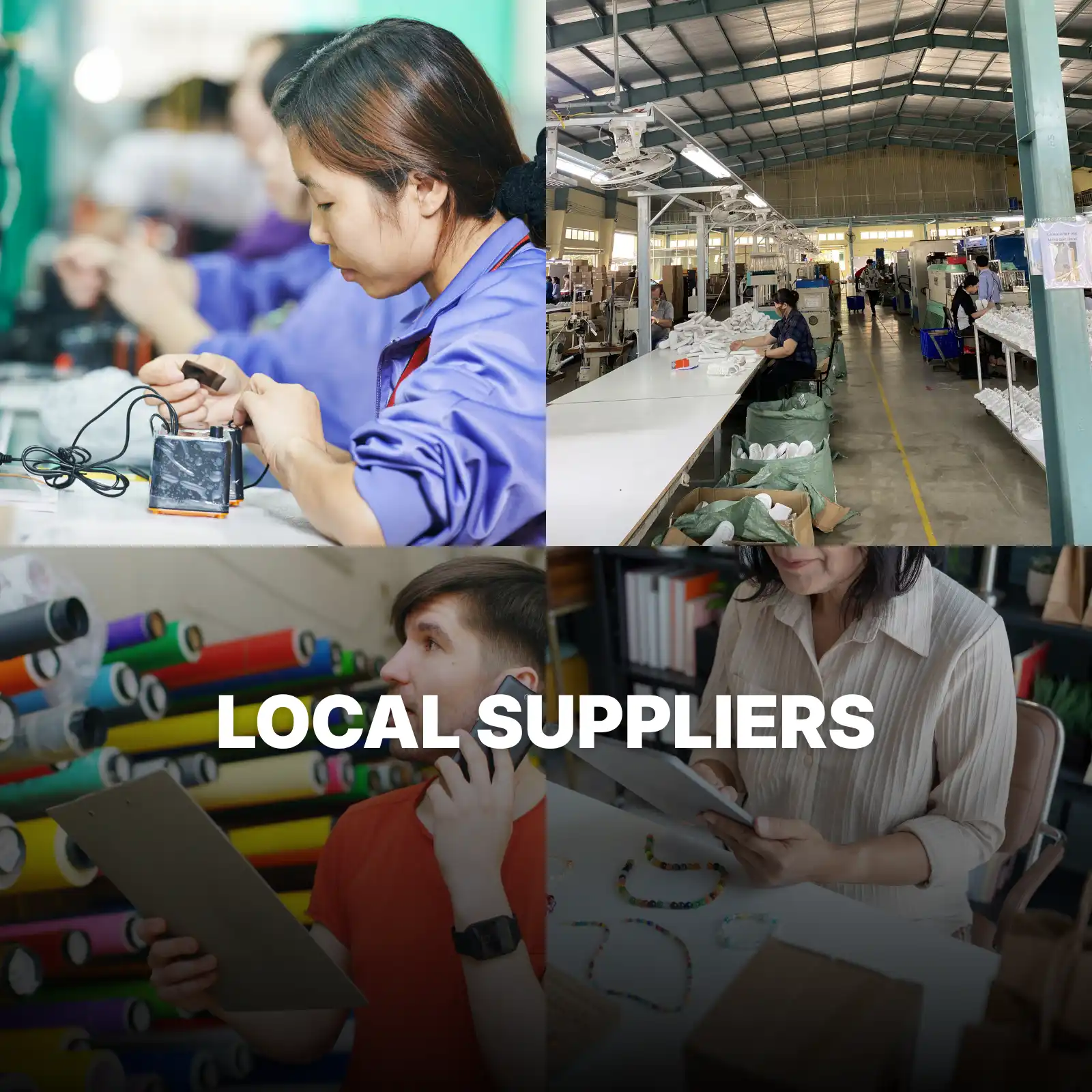
Most local manufacturers are highly engineering-focused rather than marketing-focused. They excel at production execution on the floor but often lack polished, proactive international sales departments. This means their initial communication regarding your Vietnam sourcing inquiry might seem slow, rigid, or highly technical. Overseas teams must be prepared to actively drive the relationship and structure the communication workflow themselves.
The difference between factories, trading companies, and intermediaries
Not every contact you establish is the actual manufacturer. The local ecosystem contains a dense mix of direct factories, trading companies acting as middlemen, and independent agents. Trading companies can offer broad product ranges and fluent English, but they add hidden margins. More importantly, they drastically reduce your direct control over the assembly line, which is a massive liability when trying to solve technical problems during mass production.

The role of specialized industrial clusters
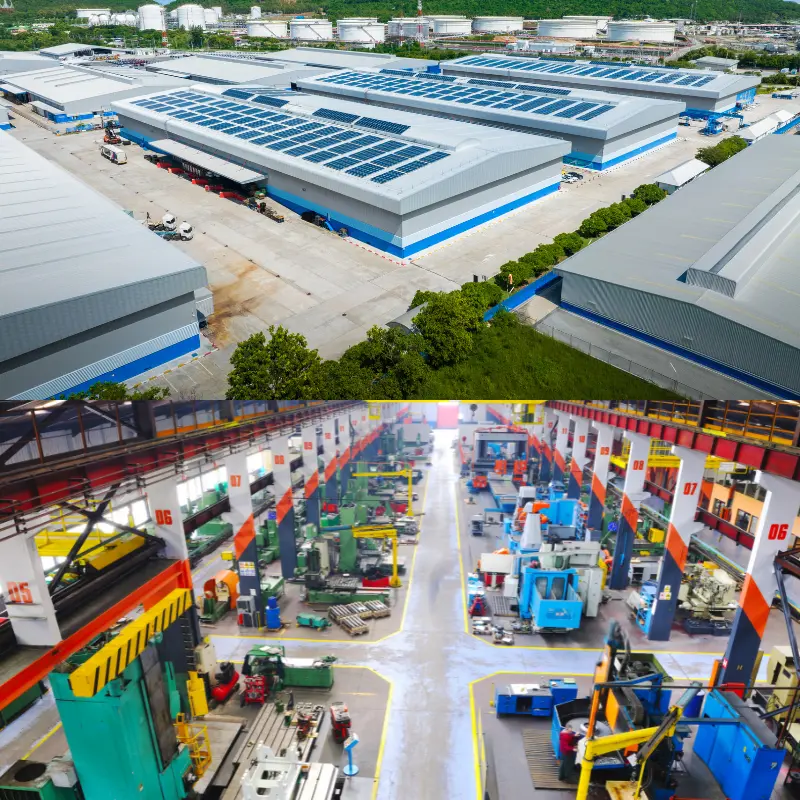
Unlike regions where every component is produced in one mega-city, production here is clustered. Electronics and precision engineering are heavily concentrated in northern provinces like Bac Ninh and Bac Giang, leveraging supply routes from Northern Asia. Meanwhile, garments, textiles, and wooden furniture dominate southern hubs like Binh Duong, Dong Nai, and Ho Chi Minh City. Sourcing across these clusters requires distinct logistical planning for inland freight.
Why supplier visibility is often limited for overseas companies
Many highly capable, large-scale factories do not maintain updated English websites or invest heavily in SEO. They rely on established B2B networks, physical trade shows, and referrals from existing anchor clients. Because of this, overseas buyers conducting searches purely through search engines often only interact with the most marketing-savvy trading companies, entirely missing the most competent direct manufacturers.
How supplier relationships dictate operational speed
Business execution here is deeply relationship-driven. Commercial contracts set the legal baseline, but mutual trust dictates how operational problems are actually solved on the floor. Factories are far more likely to prioritize production schedules, absorb minor raw material price hikes, and accommodate rush orders for partners who invest time in building long-term relationships, rather than buyers treating every interaction as a transactional bidding war.

Why communication structure matters in Vietnam factory sourcing
Information does not always flow seamlessly from the sales desk to the production line. A specification agreed upon via email with an English-speaking account manager must be accurately translated and strictly enforced by floor supervisors. Without a structured communication protocol and technical tech-packs, critical details in your Vietnam factory sourcing project are frequently lost in translation, leading to entire batches of defective goods.
What International Companies Usually Expect — And What Actually Happens
Many procurement teams enter the region expecting a plug-and-play replica of highly integrated supply chains found elsewhere. This mindset consistently leads to severe operational friction. Understanding the gap between expectation and reality is essential for smooth Vietnam sourcing operations.
Expecting instant supplier verification
Buyers evaluating Vietnam suppliers often expect to verify a factory’s legitimacy within hours through centralized online databases. In reality, verifying machinery capacity, financial health, and true compliance certifications requires rigorous physical audits. Relying on digital directories or generic PDFs is an unacceptable risk when wiring large production deposits.

Assuming localized raw material ecosystems
Companies often assume every zipper, button, or electronic IC needed for their product is available within a ten-mile radius of the assembly plant. In reality, many factories executing export orders must import specialized raw materials or trims from neighboring countries. This reliance on Tier-2 and Tier-3 cross-border suppliers adds distinct inbound lead times that must be factored into your critical path schedule.
Underestimating communication cycle times
Companies expect instant, perfectly clear replies to highly complex engineering questions. However, language barriers and time zone differences often turn a simple specification clarification into a multi-day email chain. This operational friction drastically slows down the initial research and development (R&D) and quoting phases.
Misunderstanding MOQ flexibility parameters
While the market is generally flexible to accommodate scaling brands, flexibility has structural limits. Factories are willing to work with lower Minimum Order Quantities (MOQs) to initiate a working relationship, but they still require realistic, documented volume projections to allocate their production lines efficiently. You cannot secure competitive pricing without providing a long-term forecast.

Assuming identical intellectual property (IP) protection
A common misconception is that standard Non-Disclosure Agreements (NDAs) signed via email offer absolute protection. While IP laws are maturing, the operational reality of enforcing them remotely is complex. Companies often face disputes over who owns custom injection molds or specialized tooling if they decide to move their production to a competing facility later on.
Why production timelines sometimes shift unexpectedly
Production timelines can shift rapidly due to delayed raw material imports, localized power grid management during dry seasons, or sudden peak season capacity crunches. If your order volume is relatively small and you lack local oversight, your production slot might be quietly pushed back without warning to accommodate larger anchor clients.
Vietnam Suppliers: How Companies Evaluate Them Remotely
To navigate these realities, executive teams must replace assumptions with structured decision-making models. Adopting rigorous evaluation frameworks ensures your strategy is built on operational data rather than aggressive sales pitches.

Why websites alone are not enough
Never evaluate Vietnam suppliers based solely on their digital presence. A beautiful website often masks a small, subcontracting workshop, while a massive, highly capable facility might have a web page that looks a decade old. Your evaluation must dig deeper into verifiable export records and physical infrastructure.

Factory photos and certifications can be misleading
It is alarmingly common for intermediaries to send photographs of facilities they do not own. Similarly, compliance certifications (like ISO, BSCI, or WRAP) might be expired, borrowed, or applicable only to a specific building within a larger complex. Every document must be independently cross-referenced with the issuing authority.
How companies verify operational capability
A robust evaluation framework assesses engineering capabilities directly. Can the factory understand your technical tolerances? Do they have internal testing labs for fabric colorfastness or electronic stress testing? Evaluating their internal quality control infrastructure is far more important than evaluating their initial price quote.
What buyers usually look for during supplier evaluation
Experienced procurement directors look for transparency in the Bill of Materials (BOM). When asking for a quote, a reputable manufacturer will provide a breakdown of material costs, labor, and profit margins. If a supplier refuses to explain how they arrived at a specific unit price, it is a significant red flag for future cost-scaling.
Auditing compliance and social responsibility
Major retail markets in the US and EU enforce strict forced-labor and environmental regulations. Evaluating Vietnam suppliers means auditing their payroll records, wastewater treatment facilities, and fire safety standards. Failing to verify these elements exposes your brand to massive reputational risk and customs seizures at the destination port.
The importance of sample development before scaling
The lowest unit price is irrelevant if the factory cannot technically execute the design. You must separate commercial negotiations from technical capability assessments. The true test of a supplier is how they handle the prototyping phase: how they interpret tech-packs, solve engineering hurdles, and incorporate revision feedback.
The Hidden Challenges of Vietnam Factory Sourcing
Even with a verified partner and a strong evaluation framework, executing a production run involves daily friction. Managing these operations requires anticipating hidden challenges before they derail your delivery schedule and freeze your working capital.

Production visibility limitations
Once the deposit is paid, overseas buyers often enter an operational blind spot. Unless you have personnel on the ground, you are entirely reliant on the factory’s self-reported progress. In remote management, you rarely know if the assembly line is running behind schedule until the container loading date approaches.
Managing raw material lead times from cross-border suppliers
If your product requires specialized textiles or microchips, they will likely arrive via overland trucking from Northern Asia. Customs delays at border gates like Lang Son can instantly halt your production line. Managing a Vietnam factory sourcing project means actively tracking your Tier-2 suppliers, not just the final assembly facility.
Specification misunderstandings on the line
A tech-pack that is 95% clear will still fail during mass production. If a tolerance measurement is slightly ambiguous, line workers will often make assumptions to keep the assembly moving rather than stopping the line to ask questions. These silent assumptions consistently result in costly rework.
Quality consistency between samples and bulk orders
Producing one perfect functional sample in a dedicated, well-lit R&D room is entirely different from producing 10,000 identical units on a fast-moving, high-temperature assembly line. Without strict, standard inline quality control (QC) checkpoints, bulk orders frequently drift away from the approved golden sample standard.
Handling defect rates and chargeback negotiations
When defects are found post-shipment, negotiating chargebacks or replacement units remotely is incredibly difficult. Unlike some regions where chargebacks are a standardized accounting procedure, local factories often view them as a massive breach of relationship. Defining the Acceptable Quality Limit (AQL) in your initial contract is strictly required.
Subcontracting without buyer awareness
During peak demand seasons, a factory might accept your order but secretly subcontract the actual assembly to a smaller, un-audited facility to meet their deadlines. This unauthorized practice introduces massive quality, social compliance, and IP risks to your supply chain strategy that are almost impossible to detect from overseas.
Export documentation and coordination issues
Producing the goods is only half the battle. Incorrectly formatted packing lists, commercial invoices, or Bills of Lading can cause your containers to be held at the port. Administrative errors here lead directly to expensive Demurrage and Detention (D&D) fees and missed retail distribution windows.
Why Some Companies Struggle With Vietnam Sourcing
Despite the distinct advantages of the region, we regularly see companies fail to execute their strategies. These failures rarely stem from the factories’ technical inabilities. They almost always stem from how the buyer executes their operations.

Relying only on online sourcing platforms
Treating complex manufacturing like a simple e-commerce transaction never works. Companies that attempt to conduct Vietnam sourcing entirely through chat portals without ever conducting physical site visits expose themselves to immense financial risks and almost always suffer from poor quality output.
Choosing Vietnam sourcing based only on pricing
The lowest quote almost always hides the highest risk. Factories bidding significantly below market rates often cut corners by using inferior, untested raw materials, skipping crucial internal QC steps, or outsourcing labor to unverified workshops. The money saved on the initial invoice is quickly lost in defective, unsellable inventory.
Lack of technical documentation
Sending a factory a photograph and asking for a price quote is a recipe for operational disaster. Without a comprehensive Bill of Materials (BOM), 2D/3D CAD drawings, material safety data sheets, and strict tolerance guidelines, you force the factory to guess your production requirements.
No local production visibility
Managing complex supply chains blindly is a strategic error. When companies rely solely on the factory manager to report issues, they only hear about problems when it is too late to fix them. Lack of local visibility means you forfeit the ability to intervene proactively.
Communication handled entirely through sales teams
If your only contact is an English-speaking sales representative, you are isolated from the actual production engineers. When technical problems arise on the line during mass production, the sales team lacks the deep expertise to explain the root cause, propose viable engineering solutions, or authorize timeline adjustments.
Failing to establish secondary backup suppliers
Many companies find one good factory and immediately route 100% of their volume there. If that factory suffers a localized disruption, power outage, or capacity crunch, the brand’s entire global inventory is frozen. Smart Vietnam sourcing requires developing at least one active backup supplier for every critical product category.
What Makes the Vietnam Sourcing Market Different Operationally
When developing a long-term strategy, procurement teams must recognize that this ecosystem behaves uniquely. It requires a different management approach compared to highly centralized, mature legacy markets.

Relationship-driven supplier communication
As mentioned earlier, the depth of your relationship directly impacts your factory’s responsiveness. Managers here value face-to-face interactions (even via video) and long-term commitments. Taking the time to understand their operational constraints builds goodwill that pays off during production crises.
More flexibility for medium-sized production
One of the distinct advantages of the Vietnam sourcing market is the willingness of factories to grow alongside your brand. While they cannot run lines at a loss, many facilities are structured to handle medium-volume production runs efficiently, making this an ideal region for scaling brands testing new product lines.
Smaller factory ecosystems compared to legacy hubs
While the infrastructure is vast, you will rarely find the “mega-cities” dedicated to a single hyper-specific component. The ecosystem relies heavily on interconnected networks. This means your lead times must account for domestic freight moving between industrial parks, rather than just across the street.
The concept of ‘flexible but rigid’ production planning
Factories here operate on tight, highly optimized schedules to maintain their margins. They are flexible during the negotiation and sampling phases. However, once a production slot is locked in, asking for sudden changes in order volume or design specifications is incredibly disruptive and will often result in massive delays.
Production coordination often requires closer follow-up
Because middle-management structures in some developing factories are still maturing, top-level directives do not always cascade down perfectly. Overseas teams must follow up more frequently, asking specific, binary questions to ensure that agreed-upon operational changes have actually been implemented on the floor.
Can Companies Successfully Manage Vietnam Suppliers Remotely?
Yes, it is entirely possible, but it requires a highly structured, disciplined approach and an acceptance of increased risk. Companies executing remote management successfully share specific, rigorous operational traits.
Remote sourcing realities
Managing suppliers remotely means accepting slower communication cycles, building buffer time into every stage of the schedule, and acknowledging vast operational blind spots. If a project requires an aggressive, unforgiving timeline, managing it strictly via email from another continent is highly vulnerable to failure.
Communication workflows across time zones
A massive time difference means you have one brief window for live communication each day. Your emails must be incredibly precise, utilizing numbered lists, visual diagrams, and clear actionable questions. Sending an ambiguous email simply wastes a 24-hour cycle in your production timeline.
Managing QC without local presence
If you cannot travel, you must hire independent third-party QC firms. However, these firms only inspect what you explicitly instruct them to inspect based on your documentation. They provide a static snapshot of quality (usually via a final random inspection), but they do not actively manage the factory to prevent the defects from occurring.
Leveraging digital supply chain mapping
Advanced procurement teams use software to track raw material staging and production milestones. However, this relies entirely on the factory accurately inputting data. If the factory’s internal ERP system is weak, your digital dashboard is essentially useless for managing Vietnam suppliers remotely.
Why many companies eventually seek local operational support
After experiencing the friction of late-night calls, misaligned samples, delayed shipments, and inconsistent batch quality, most mid-to-large brands realize that managing complex production purely from overseas is inefficient. They eventually transition to utilizing local operational assets to protect their investments.
Vietnam Sourcing: What Companies Often Overlook
Even experienced procurement teams can be caught off guard by specific local nuances. Understanding these underlying elements separates successful buyers from those who constantly battle supply chain disruptions.

Production schedules shift heavily around local holidays
The Lunar New Year (Tet) effectively shuts down the entire manufacturing sector for up to two weeks in late January or February. However, the operational impact lasts much longer. The pre-holiday rush causes capacity crunches, and post-holiday worker retention issues delay restarting the lines. You must plan your Q1 inventory around this massive disruption.
Tooling and mold ownership disputes
If you pay for custom injection molds or specialized cutting dies, you must have a clear, locally enforceable contract stating that you own the physical tooling and can remove it at any time. Without this, factories may hold your molds hostage if you attempt to transition to a new supplier.
Not all factories handle export processes equally well
A factory might produce excellent physical goods but lack an experienced export documentation team. Navigating complex Free Trade Agreements (like the EVFTA or CPTPP) requires precise certificates of origin. If they mishandle this paperwork, you will lose crucial tariff exemptions when your shipments arrive at customs.
Compliance expectations vary widely by industry
While export-heavy apparel and footwear factories are highly accustomed to strict US and EU compliance audits, factories in emerging or heavy-industrial sectors might view these demands as a disruptive administrative burden. You must clearly outline your specific compliance requirements before initiating any Vietnam sourcing quotes.
Long-term success depends heavily on communication consistency
The most secure supply chains here are built on stable, predictable communication. Frequent changes to management personnel on the buyer’s side often disrupt the established working rhythm. In this ecosystem, consistency directly breeds operational speed and reliability.
What a Typical Vietnam Factory Sourcing Workflow Looks Like
To mitigate risk, procurement teams must follow a disciplined, unyielding operational sequence. Skipping steps to save time almost always results in expensive rework later.
Initial supplier discovery
This involves casting a wide net, moving beyond basic internet searches to utilize local trade networks, industrial park registries, and industry intelligence. The goal is to build a long list of potential candidates based on verifiable, stated capabilities rather than marketing claims.
Factory evaluation discussions
Narrow down the list by engaging in deep technical discussions. Request detailed equipment lists, review past export records (Bills of Lading), and aggressively assess their understanding of your industry’s specific tolerances. This rigorous stage filters out the intermediaries and under-qualified facilities.
Sample and specification alignment
Submit your detailed tech-pack and pay for a functional prototype. This is an active collaboration phase. You must evaluate not just the physical product, but how the factory handles feedback, solves engineering challenges, and communicates revisions. Never move forward if this phase is chaotic.
MOQ and production planning
Once the golden sample is approved, negotiate the commercial terms. Lock in the pricing based on volume tiers, define the Acceptable Quality Limit (AQL) percentages in writing, and establish clear penalties for late deliveries or unauthorized subcontracting.
Bulk production coordination
This is where execution matters. Through strict Vietnam factory sourcing protocols and active management, you must monitor the transition from the R&D room to the mass production line, ensuring standard operating procedures (SOPs) are strictly followed by floor workers.
Quality control checkpoints
Implement inline inspections when the line first starts (DUPRO). Never wait until 10,000 units are fully packed to check for systemic defects. Catching an error on day two of production saves weeks of rework and protects your raw material investment.
Export preparation and shipment coordination
Ensure the factory’s logistics team coordinates smoothly with your designated freight forwarder. Verify that commercial invoices, packing lists, and verified gross mass (VGM) declarations are submitted accurately to prevent customs delays in your export workflow.
When Local Sourcing Support Becomes Important
There is a distinct operational breaking point where managing production purely via email becomes a liability rather than a cost-saving measure. Recognizing this threshold is critical for protecting your supply chain strategy.

Factory verification support
When you are about to wire a 30% deposit for a six-figure production run, you need absolute certainty. Local support teams physically visit the site to verify that the machinery exists, the workers are present, and the factory is not just a shell company.
Supplier communication coordination
When complex technical issues arise that cannot be solved quickly over email, having a local engineering team step in to speak directly with factory supervisors in their native language is invaluable. It turns a week-long production delay into a ten-minute resolution.
Production follow-up visibility
When you need to know exactly what is happening on the floor today, a local partner checks the pilot run. They verify raw material staging and ensure the factory is actually prioritizing your order over competing clients during peak seasons.
Crisis management on the floor
If an inline QC check fails, you cannot wait three days to figure out why. Local support teams go directly to the factory floor, identify the root cause of the defect, and implement corrective action plans immediately, preventing the entire batch from being ruined.
Managing supplier accountability
Factories behave entirely differently when they know a local representative might walk through their doors unannounced. This constant, physical presence keeps suppliers accountable to timelines and quality standards in a way that remote emails simply cannot enforce.
How VNvendor Supports Companies Exploring the Vietnam Sourcing Market
We understand these operational hurdles deeply because we manage them daily. Our role is to bridge the gap between your corporate procurement objectives and the gritty reality of the factory floor.
Partnering with an experienced Vietnam sourcing company is not about outsourcing responsibility; it is about applying necessary local operational control. Through VNvendor sourcing, we provide the physical presence, local intelligence, and structural oversight required to succeed in this complex ecosystem.

Supporting supplier visibility
We bypass unreliable online directories entirely. When you are sourcing from Vietnam, we connect you directly with a thoroughly vetted network of capable manufacturers. We audit their facilities, verify their true compliance, and ensure they have the physical capacity to handle your exact volumes.
Production coordination support
We act as your extended local operations team. Through structured Factory sourcing management, we monitor the production timeline relentlessly. If an inbound material is delayed, we identify the bottleneck immediately and work directly with factory management to adjust schedules.
Technical documentation assistance
We help refine your technical specifications. We ensure every tolerance, material requirement, and testing standard is clearly translated into actionable instructions for the factory floor, preventing the expensive misunderstandings that commonly ruin unmonitored production runs.
Reducing sourcing friction during production
The greatest value we deliver to our clients is absolute peace of mind. Your procurement team does not need to waste valuable time navigating language barriers, time zones, or unpredictable factory behaviors. We absorb the friction so your team can focus on scaling your brand.
If you are ready to secure your supply chain with proven operational oversight and eliminate the risks of remote management, contact VNvendor today to discuss your specific Vietnam sourcing requirements.
Conclusion
Successfully navigating the supply chain here requires far more than finding a supplier on a directory and asking for a price quote. True success in Vietnam sourcing depends entirely on operational understanding, rigorous supplier validation, and relentless production oversight.
The market offers incredible advantages for brands looking to diversify their global manufacturing footprint, but these advantages are only realized by teams that prepare for the actual friction points of the ecosystem. By maintaining clear communication, setting realistic expectations, and utilizing local operational control when necessary, your company can build a highly resilient, profitable, and secure supply chain.

