
Difference Between Sourcing vs Procurement vs Purchasing
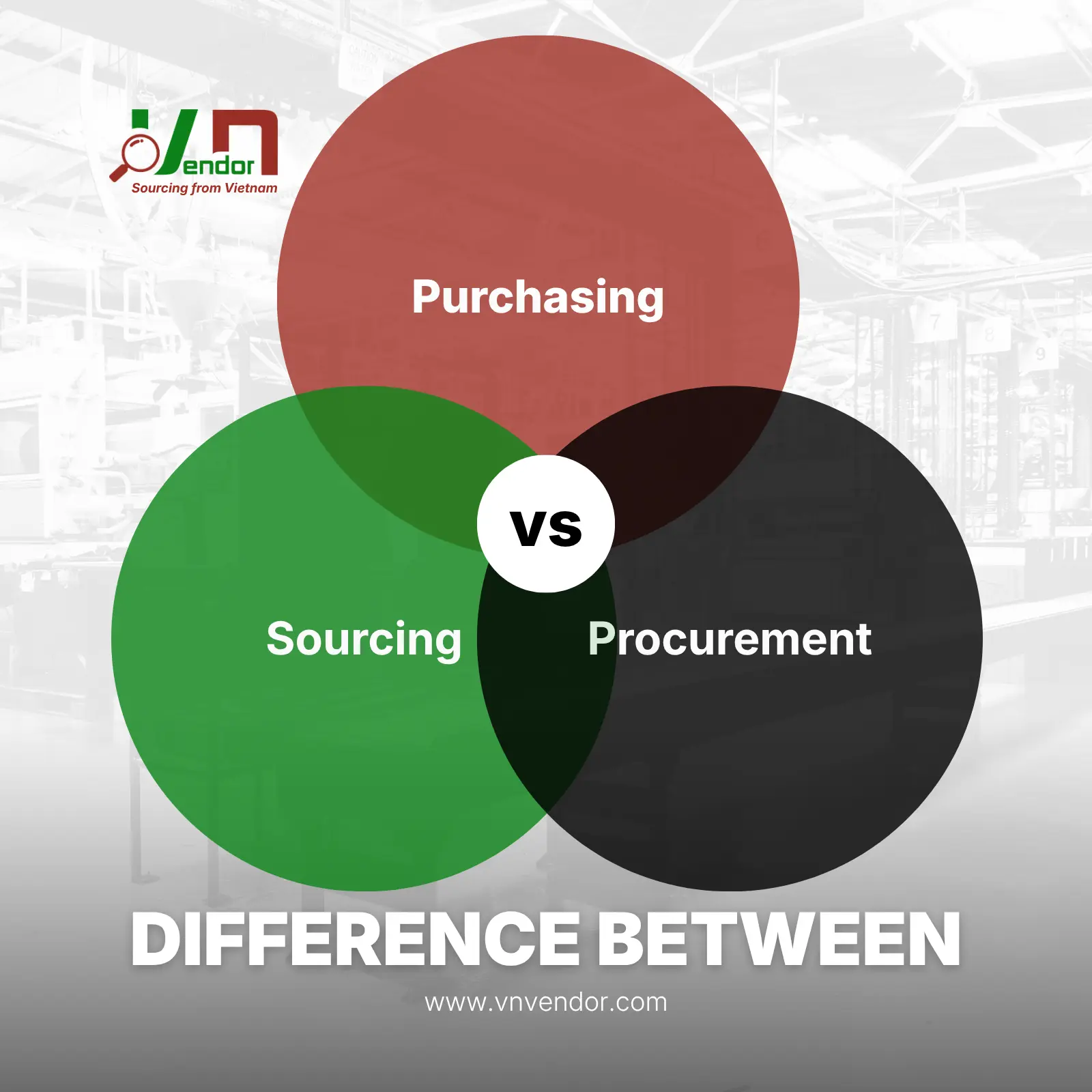
Many international businesses use specific supply chain terms interchangeably without realizing the operational impact. They often treat sourcing, procurement, and purchasing as the exact same function. In global manufacturing operations, this terminology confusion creates real business problems. When you misunderstand the terminology, you risk making poor supplier decisions and misallocating your resources.
Your team might experience weak cost control and poor operational visibility. Buyers often assign the wrong key performance indicators to the wrong teams. In manufacturing and global supply chains, distinguishing between sourcing vs procurement vs purchasing is highly critical.
This article explains how these distinct business functions actually operate inside manufacturing companies. We will clarify the sourcing vs procurement debate so your team can build a more resilient supply chain. Understanding these differences is the first step toward better supplier management.
Defining Sourcing vs Procurement vs Purchasing Functionally
To build a reliable supply chain, you must clearly define the roles of your internal teams. Let us look at what these functions actually mean in a business reality. Understanding sourcing, procurement and purchasing begins with knowing their individual scopes.
What Is Procurement?

Procurement is a broad umbrella function that manages the entire strategic lifecycle of your supplier relationships. This role covers vendor management, contract negotiation, compliance tracking, and overall risk management. Procurement focuses heavily on long-term cost optimization rather than immediate technical details. A procurement team sets the overarching rules for how a company buys materials and services. They establish the corporate frameworks that ensure legal and financial safety across the entire vendor base.
Furthermore, procurement professionals evaluate geopolitical risks and supply chain vulnerabilities. They want to ensure that the company has a steady flow of materials for the next five years. They do not usually visit the factory floor to check the calibration of a sewing machine. Instead, they focus on master service agreements and corporate liability. In the sourcing vs procurement discussion, procurement is always the strategic boundary setter.
What Is Sourcing?

Sourcing is the critical starting point of the physical supply chain and production process. It focuses entirely on supplier discovery, factory evaluation, and direct capability assessment. When your company needs to manufacture a new product, sourcing is the function that finds the right factory. This involves sample development, technical communication, and initial price negotiation based on technical specifications. Sourcing requires deep local market knowledge to evaluate if a factory can actually meet your technical requirements.
A sourcing professional must understand raw materials, production techniques, and quality control systems. They spend their time on the factory floor verifying production lines and assessing worker conditions. Without a strong sourcing team, your procurement contracts are useless because you might partner with incapable suppliers. Understanding the difference between procurement and sourcing means recognizing that sourcing handles the physical manufacturing reality.
What Is Purchasing?

Purchasing is strictly a transactional and administrative execution function. It handles the daily operational execution of buying goods that have already been negotiated. This function involves issuing formal purchase orders, tracking invoices, coordinating logistics, and managing routine material reorders. Purchasing teams do not deal with overarching corporate strategy or initial factory discovery. They ensure that approved orders are placed correctly and paid for on time.
In a well-structured company, purchasing only operates within the parameters set by the procurement team. They communicate with the suppliers that the sourcing team has already verified and approved. Their main objective is administrative efficiency and ensuring that paperwork flows smoothly between your company and the vendor. When looking at sourcing vs procurement vs purchasing, purchasing is the final execution step.
The Operational Debate: Sourcing vs Procurement
When analyzing Sourcing vs Procurement, you must look at their specific operational objectives. Many companies fail because they expect administrative teams to handle strategic sourcing. The difference between procurement and sourcing is heavily defined by what each team is measured against.
Procurement Focuses On Long-Term Supply Stability
Procurement teams build operational frameworks that protect the company. They ensure the supply chain remains stable and legally compliant over several years. They look at macro-level risks, such as international trade policies or global material shortages. In the Sourcing vs Procurement dynamic, procurement asks how a supplier impacts corporate risk. They track total cost savings and contract compliance as their primary metrics.
Sourcing Focuses On Supplier Selection And Capability
Sourcing teams assess technical reality on the ground. They visit factories, audit production lines, and verify actual manufacturing capabilities. In the debate of sourcing vs. procurement, sourcing is much closer to the physical product. They care about whether a factory can produce ten thousand units with consistent quality. Sourcing teams measure their success by sample accuracy, factory lead times, and initial price viability.
Purchasing Focuses On Transaction Execution
Purchasing teams handle paperwork, enterprise software systems, and daily communication. They track whether a specific batch of goods has been invoiced correctly. Their role is pure administrative efficiency. They do not negotiate the sourcing vs procurement strategy; they simply execute the active purchase orders.
Sourcing vs. Purchasing: Where Operational Confusion Happens
A common and costly issue we see is the deep confusion between sourcing vs purchasing. This happens because both functions deal with acquiring goods for the company. However, the difference lies in the timeline and the depth of supplier involvement.
The Danger Of Assigning Sourcing To Purchasing Teams
Sourcing happens before mass production begins, while purchasing happens during production. If you ask a purchasing manager to handle sourcing, they will likely choose the cheapest option on a directory. They treat supplier discovery like ordering office supplies. This misunderstanding of sourcing vs purchasing leads to catastrophic manufacturing delays.
Why Sourcing Requires Technical Manufacturing Knowledge
Purchasing teams often lack the technical experience to audit a factory’s quality control system. Sourcing requires someone who can read a tech-pack and challenge a factory engineer. When leadership ignores the reality of sourcing vs purchasing, they expose the brand to massive quality control risks.
Procurement vs Purchasing: Strategy Versus Execution
Another frequent and dangerous misunderstanding in corporate supply chains is Procurement vs Purchasing. Procurement develops the overarching strategy that purchasing eventually executes. Procurement decides which specific suppliers are approved for the company to use safely.
The Risk Of Purchasing Without Procurement Strategy
Purchasing simply issues the orders to those pre-approved suppliers. If a company only has purchasing but no procurement, they buy entirely reactively. They lack long-term contracts, exposing the business to sudden price increases. This is why Procurement vs Purchasing must be clearly defined in your corporate structure.
How Procurement Protects The Purchasing Workflow
Without procurement setting the legal boundaries, purchasing teams might accept terrible vendor terms. Procurement vs Purchasing is essentially the difference between building a safe road and driving a car on it. Procurement negotiates the payment terms so purchasing knows exactly when to pay the invoice.
A Clear Comparison: Breaking Down The Supply Chain Roles
To truly grasp the operational reality of the Sourcing vs Procurement vs Purchasing debate, it is incredibly helpful to look at a simple, side-by-side comparison. In global supply chains, separating these definitions is not just academic; it directly impacts how smoothly your product goes from an initial idea to a delivered good.
Below is a clear breakdown of how these three critical business functions differ in their daily focus, their timelines, and their ultimate goals.
| Business Function | Primary Objective | Operational Timeline | Core KPI & Measurement |
|---|---|---|---|
| Procurement | Establish strategic, legal, and financial supply chain frameworks. | Long-term (Years); continuous corporate risk management. | Total cost optimization, contract compliance, supplier risk reduction. |
| Sourcing | Discover, evaluate, and verify physical manufacturing capabilities. | Mid-term (Months); focused on pre-production and factory setup. | Factory audit scores, sample accuracy, initial unit price viability. |
| Purchasing | Execute daily administrative transactions and order fulfillment. | Short-term (Days/Weeks); routine operational execution. | Purchase order accuracy, on-time invoice payment, delivery tracking. |
A Real-World Manufacturing Example
Let us apply this Sourcing vs Procurement vs Purchasing framework to a practical business scenario. Imagine an international brand planning to launch a new line of high-end wooden dining tables.
1. The Procurement Phase (The Strategy): The corporate procurement team analyzes the global market and decides that sourcing from Vietnam is the most financially secure strategy due to favorable trade agreements and abundant raw materials. They draft a two-year master service agreement, stipulating that any vendor used must adhere to strict environmental certifications and accept net-60 payment terms. They set the legal boundaries.
2. The Sourcing Phase (The Reality): With the strategy set, the sourcing team takes over. They travel to industrial zones, physically inspecting multiple wood factories. They assess the condition of the CNC cutting machines, review the factory’s moisture-control processes for timber, and negotiate the specific cost to manufacture one dining table based on technical drawings. They are the ones who verify that Factory A can actually build the table without the wood warping. They handle the difference between procurement and sourcing by dealing with the physical product.
3. The Purchasing Phase (The Execution): Once the sourcing team successfully approves Factory A and the perfect prototype is signed off, the purchasing team steps in. Every single month, the purchasing department logs into their software system and issues a formal Purchase Order for 500 dining tables. When the tables are shipped, purchasing ensures the factory’s invoice is paid according to the net-60 terms that procurement originally negotiated.
In this scenario, if the brand confused sourcing vs purchasing and asked the purchasing manager to find the factory, they might have selected a supplier with poor machinery, leading to hundreds of defective tables.
Why Companies Confuse Sourcing vs Procurement
You might wonder why these specific terms are mixed up so often in business. Several operational realities contribute to this sourcing vs procurement confusion.
Smaller Companies Often Combine All Supply Chain Roles
Small businesses rarely have the budget for separate specialized teams. One person might find the factory, negotiate the master contract, and pay the final invoice. Because one person handles everything, the company views sourcing vs procurement as the exact same job.

Manufacturing Companies Usually Separate Them Strictly
Enterprise manufacturing companies separate these functions out of operational necessity. A brand making canvas bags will have sourcing teams evaluating fabric mills in Asia. They will have a separate procurement team in headquarters managing the multi-year cotton contracts. The difference between procurement and sourcing is very obvious at the enterprise level.
Terminology Changes Across Different Global Industries
The terminology shifts wildly depending on the business sector. Retail brands might call everything related to sourcing vs. procurement “merchandising.” Government entities often use the word “procurement” for all buying activities, including sourcing. This inconsistency causes international buyers to use the wrong terms when speaking to overseas manufacturers.
Understanding The Difference Between Procurement And Sourcing Workflows
To truly see the difference between procurement and sourcing, we must look at their daily workflows. These workflows prove how distinct the functions actually are.
The Strategic Steps Inside A Procurement Workflow
Procurement deals with corporate-level supply management and vendor risk assessment. The standard workflow includes developing a corporate supplier strategy that aligns with financial goals. Procurement establishes strict vendor approval criteria that every supplier must meet. They manage legal compliance, coordinate third-party auditing, and negotiate long-term master service agreements. sourcing vs. procurement becomes clear when you see procurement dealing mostly with lawyers and finance directors.
The Technical Steps Inside A Sourcing Workflow
Sourcing requires direct, daily interaction with manufacturing capabilities and factory managers. The standard workflow includes conducting deep supplier research and local market analysis. Sourcing teams send out requests for quotation and analyze the technical breakdowns of the pricing. They conduct physical factory evaluations, technical audits, and manage complex prototype development. In the context of sourcing vs procurement vs purchasing, sourcing handles the physical product creation phase.
The Administrative Steps Inside A Purchasing Workflow
Purchasing operates on a highly structured, repetitive, and time-sensitive cycle. The standard workflow includes receiving internal material requests from the production department. They issue formal purchase orders to approved vendors and track order fulfillment dates. Purchasing coordinates closely with the accounting department to ensure invoice payments match the delivery receipts.
Why Factory Sourcing Is The Most Commonly Outsourced Function
Among these three supply chain roles, sourcing is the most difficult to execute remotely. This is why many international companies outsource Factory sourcing to specialized local partners.
Supplier Discovery Requires Deep Local Market Knowledge
Finding a reliable factory on the internet is an incredibly risky strategy. Real manufacturing capabilities are often hidden behind poor websites or language barriers. Local sourcing teams know which factories actually produce goods and which are just trading companies. Understanding Sourcing vs Procurement helps executives realize why local presence is mandatory for supplier discovery.
Factory Verification Is Difficult To Execute Remotely
You cannot verify actual production capacity through emails or video calls. Sourcing requires physical presence and technical observation. Someone must walk the factory floor, check the heavy machinery, and verify the working conditions. This is a core difference between procurement and sourcing; sourcing requires boots on the ground.
Local Teams Reduce Communication And Operational Risks
Communication barriers constantly slow down supplier evaluation and sample development. Time zone differences delay critical sample approvals and production adjustments. By using a local team, you bridge the gap between your headquarters and the factory’s operational reality.
Industries Relying On Sourcing vs Procurement vs Purchasing Strategies
Understanding the difference between procurement and sourcing helps companies realize they need specialized support across virtually every manufacturing sector. As global supply chains face unprecedented pressure, many industries are aggressively shifting production to new international hubs to diversify risk.
If your leadership team is evaluating this exact transition, exploring why the Vietnam manufacturing hub has rapidly become a preferred destination for global brands will provide crucial strategic context. In this complex environment, relying solely on a remote purchasing team is a critical operational mistake. You need dedicated sourcing capabilities on the ground.
When companies expand their manufacturing footprint into regions like Southeast Asia, they require localized sourcing support across a massive range of product categories. The need to balance sourcing vs procurement vs purchasing strategies applies to almost every physical product brought to market. Here is a comprehensive list of manufacturing industries that heavily rely on specialized, localized sourcing operations to ensure production success:
- Apparel and Garment Manufacturing
- Textiles and Woven Fabrics
- Footwear and Shoemaking
- Bags, Backpacks, and Luggage
- Indoor Home Furniture (Wood, Metal, Upholstery)
- Outdoor and Patio Furniture
- Wood and Timber Products
- Eco-friendly and Biodegradable Packaging
- Plastic Injection Molding and Components
- Metal Stamping, Casting, and CNC Machining
- Consumer Electronics Assembly
- Home Goods, Ceramics, and Decor
- Sporting Goods and Equipment
- Toys and Juvenile Products
- Medical Device Components
- Automotive Parts and Accessories
- Industrial Machinery Components
- Private Label Cosmetics Packaging
- Agricultural Tools and Equipment
- Construction Materials and Hardware
Across all these diverse sectors, the core operational challenge remains exactly the same. The procurement team must establish the corporate legal and financial boundaries for the new region. The sourcing team must be physically present to verify that a specific metal stamping facility or textile mill can actually meet the technical tolerances required. Finally, the purchasing team steps in to execute the ongoing transactions once the supply chain is established.
Failing to respect the difference between procurement and sourcing, regardless of the industry, exposes the brand to severe quality control failures, massive production delays, and compromised technical standards.
What Companies Look For In A Sourcing Partner
When international procurement teams look for local support, their primary motivation goes far beyond simply finding a factory directory. The reality of modern global business is about strategic resource allocation. Successful companies understand that their internal teams—from C-level executives to marketing directors and senior supply chain managers—must focus their time and energy on core business growth, brand development, and high-level financial strategy.
It is highly inefficient to dedicate your most valuable internal resources to tasks that can be effectively outsourced to specialized local experts. Tasks like navigating foreign industrial zones, physically auditing production lines, and translating complex technical requirements across language barriers are incredibly time-consuming. These operational execution tasks, while absolutely vital to the physical product, take your internal teams away from the strategic work that actually scales the business.
Because of this, smart companies frequently turn to international markets, exploring and deploying comprehensive outsourcing projects. They travel to regions like Southeast Asia not just to buy goods, but to establish reliable external sourcing infrastructure. They want to maintain tight control over their overarching procurement strategy while outsourcing the heavy lifting of localized supplier discovery and factory management. In the context of the sourcing vs procurement vs purchasing dynamic, companies are actively looking to outsource the ‘sourcing’ piece to dedicated professionals. They need a partner who acts as an extension of their own business—someone who possesses real manufacturing intelligence and local leverage.
By partnering with experts on the ground, brands can deploy their outsourcing strategies safely. They gain immediate, transparent visibility into factory ownership and true production capacity without having to hire a full-time overseas team. They secure strict factory verification and technical auditing, ensuring international compliance standards are met before a single dollar is spent. This level of verification is the main difference between procurement and sourcing in practice.
Most importantly, they secure direct production coordination. A reliable partner manages the daily, granular communication between the buyer’s internal purchasing team and the factory engineers. They ensure that mass production perfectly matches the exact specifications of the approved samples. This strategic outsourcing allows the brand to grow rapidly, focusing on sales and marketing, while completely minimizing localized manufacturing risks.
How Vietnam Companies Support International Operations
In the complex discussion of sourcing vs procurement vs purchasing, sourcing is the piece requiring the most local integration. You need partners who possess real, hands-on manufacturing experience. They must understand how to translate your corporate procurement requirements into factory-level instructions.
This is where specialized, local teams provide critical, undeniable value to international brands. Working with experienced professionals ensures your production runs smoothly and on schedule. For procurement teams preparing to enter this market, reading our comprehensive guide on Vietnam sourcing: what companies should know is an excellent way to understand the local manufacturing landscape before making financial commitments.
If your company lacks a local footprint, exploring VNvendor sourcing capabilities can bridge that operational gap. You gain immediate access to verified manufacturing networks without building an internal team from scratch.
The Strategic Future Of Sourcing vs Procurement
Global supply chains have become increasingly complex and unpredictable over the last decade. In modern manufacturing, sourcing vs procurement is no longer just an academic debate for business schools. Operational risks have increased globally, forcing companies to rethink how they buy products.
Companies must actively diversify their manufacturing bases to survive supply chain shocks. As a result, sourcing has evolved from a simple search task into a highly strategic function. You cannot rely on remote purchasing teams to solve complex offshore production challenges. You need people on the ground who deeply understand factory operations and local business culture. Clear visibility into the supply chain is absolutely mandatory for long-term corporate success.
Conclusion
Procurement, sourcing, and purchasing are tightly linked but remain operationally distinct functions. Procurement sets the overarching strategy and legal boundaries for the entire company. Sourcing discovers, evaluates, and verifies the physical manufacturing factory. Purchasing simply executes the daily transactions and manages the active invoices.
Understanding the sourcing vs procurement dynamic allows you to assign the right people to the right tasks. You avoid the common trap of confusing sourcing vs purchasing, which ruins production timelines. You also respect the boundary of procurement vs purchasing, keeping your company legally protected.
In global manufacturing, sourcing is the function most often supported by external local experts. It requires local knowledge, technical production understanding, and direct supplier visibility. When you are ready to stabilize your supply chain and work with verified manufacturers, you can contact VNvendor to discuss your operational needs.

