
Clothing Sourcing from Vietnam: A Complete Industry Overview by a Sourcing Company

Global supply chains are rapidly shifting. Many international brands are now exploring clothing sourcing from Vietnam. This country has built a strong reputation. It offers high production capacity and excellent fabric quality. However, starting this journey requires careful planning. You need to understand the local market fully.
Sourcing is never just about finding a factory. It is about ensuring every detail matches your exact requirements. A successful process requires matching the right people with the right capabilities. This is why understanding the entire landscape is crucial.
This guide will explain the complete production ecosystem. You will learn about different supplier types. We will also cover the standard production steps. If you want to sourcing from Vietnam, this overview will prepare you. When buyers come to this market, they often need local expertise. You can rely on VNvendor to connect you with diverse industries. We ensure your exact needs are met without unnecessary stress.
Why Vietnam Is Becoming an Apparel Sourcing Destination
The country has invested heavily in its textile infrastructure. This makes apparel sourcing Vietnam a strategic choice for many brands. The nation is deeply integrated into the global supply chain. It serves major markets like the US, Europe, and Japan.
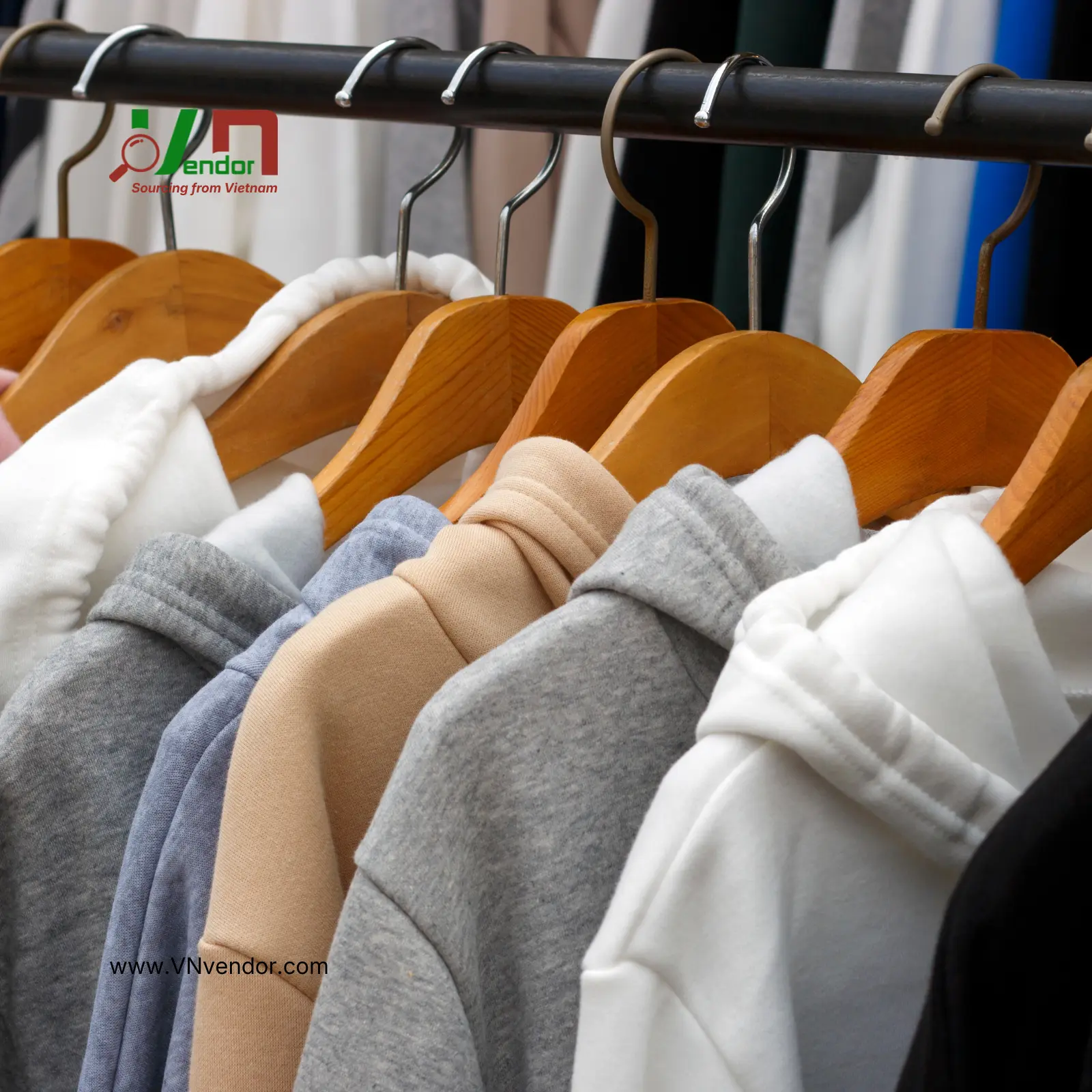
You will find a very mature manufacturing ecosystem here. The local garment workforce is highly skilled and experienced. Factories focus primarily on export-oriented production. This means they understand international quality standards perfectly. They are used to meeting strict buyer compliance rules.
Furthermore, the material and supplier ecosystem is growing fast. Factories can access diverse trims and fabrics easily. This strong infrastructure makes clothing sourcing from Vietnam highly efficient. The country is now a leading Vietnam manufacturing hub. Brands trust the stability and skill level found here. Whether you need basic items or complex garments, the capability exists.
What Types of Clothing Can You Source from Vietnam?
Buyers often wonder about local production capabilities. You can source clothing from Vietnam across many different categories. The industry handles everything from simple knits to complex woven items.
Basic apparel is a major strength. Factories produce millions of t-shirts and polo shirts annually. Hoodies, sweatshirts, and comfortable joggers are also very common. These items benefit from efficient, high-volume production lines.
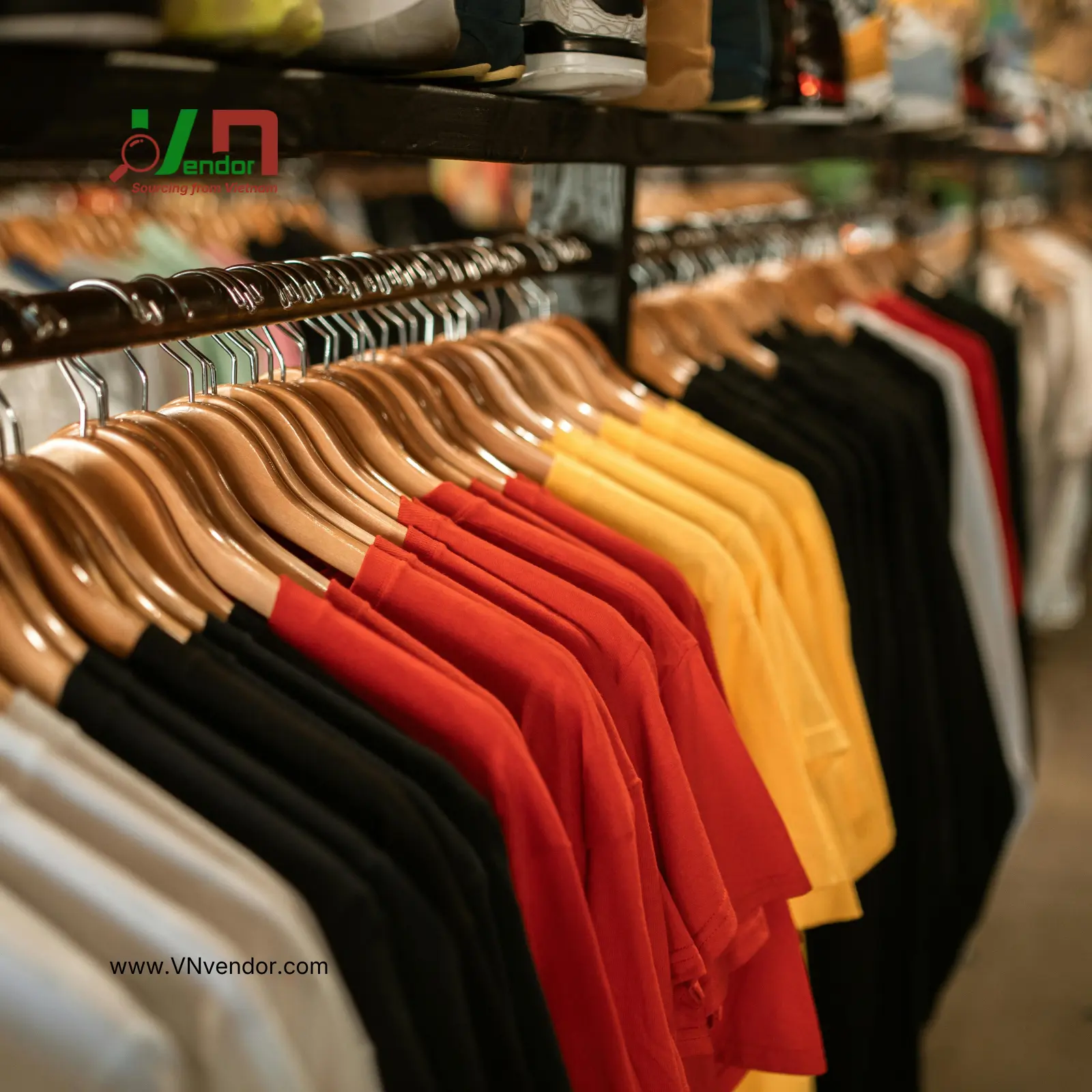
Fashion and lifestyle apparel are equally popular. Skilled workers craft beautiful dresses and tailored shirts. You can also find factories specializing in jackets and casualwear. They handle delicate fabrics and intricate details well.
Specialized apparel requires higher technical skills. Local factories excel at producing modern sportswear and activewear. Uniforms and durable workwear are another strong category. Sleepwear is also produced with high-quality soft fabrics.
Sustainable and recycled apparel is a growing trend. Many factories now use organic cotton and recycled polyester. You can request certified sustainable materials for your collections. This flexibility makes the market very attractive for modern brands.

Understanding Vietnam Clothing Suppliers
Knowing who you are working with is vital. The landscape of Vietnam clothing suppliers includes several different entities. You must choose the right partner for your business model.
Garment factories handle direct manufacturing. They own the machines and employ the workers. They offer high production capacity and control over the assembly line. Factories are suitable for buyers with clear specifications. You must understand your own production requirements well.
Sourcing companies act as your local partners. They handle supplier discovery and initial factory matching. They provide crucial communication support across different time zones. They also manage production follow-up and quality checks.
Trading companies operate differently. They buy goods from factories and sell them to you. They might handle logistics but rarely own the machines. Understanding these differences helps you avoid miscommunication later.
You should also understand standard manufacturing terms. OEM means the factory produces your custom design. ODM means you buy the factory’s existing design. Private label allows you to put your brand on ready-made products. Knowing these terms helps you filter Vietnam clothing suppliers effectively.
How Clothing Sourcing from Vietnam Typically Works
A structured approach prevents costly mistakes. Clothing sourcing from Vietnam follows a logical, step-by-step flow. You must complete each phase carefully. Understanding the difference between sourcing vs procurement vs purchasing is also helpful here.
Step one is defining your exact product requirements. You must specify the product type and fabric details. Note the required GSM, color codes, and size range. State your order quantity and target market clearly.
Step two involves finding potential partners. You can search factory directories or attend international trade shows. Referrals and online research are also very useful. Working with local sourcing partners often saves valuable time.
Step three is evaluating the suppliers you found. Check their actual factory capability and minimum order quantity. Ask for their certifications and review their production experience. You must also evaluate their quality system and communication skills.
Step four is requesting quotations and comparing options. Compare FOB and EXW terms carefully. Check the stated lead time and fabric assumptions. Always clarify exactly what is included in the quotation price.
Step five is developing and approving your samples. You will review a proto sample and a fit sample. A size set and pre-production sample must be approved next. Never start bulk manufacturing without full sample approval.
Step six covers bulk production and quality control. Factories conduct inline inspections during the sewing process. A final inspection using standard AQL ensures product quality.
Step seven is shipping and final export. You must prepare all required export documentation accurately. Choose the right freight method and confirm the Incoterms. Ensure you meet all destination market customs requirements.
Are you looking to optimize your initial steps in this market? Reading expert advice can save you significant time and money. Read more: 10 Tips for Sourcing in Vietnam
What Should You Look for in Vietnam Apparel Suppliers?
Evaluating partners requires a critical eye. When you start clothing sourcing from Vietnam, focus on actual capabilities. You need a partner who can meet your specific standards.
Manufacturing capability is the first checkpoint. Check the factory’s product specialization carefully. Do not ask a shirt factory to make heavy jackets. Verify their production capacity and inspect their equipment list. Always confirm their minimum order quantity upfront.
Quality management is another critical area. Ask about their internal QC process and inspection standards. Review how they handle defect control during mass production. Confirm they use standard AQL methods for final inspections.
Compliance and certifications matter for international markets. Look for BSCI, WRAP, GOTS, GRS, or OEKO-TEX certificates. However, remember that having a certificate does not guarantee perfection. You must check the certificate’s scope and current validity.
Communication and transparency are vital for long-term success. Evaluate their initial response time and documentation quality. A good partner provides regular, honest production updates. They must be able to understand your specifications accurately. Successful apparel sourcing Vietnam depends on clear, daily communication.
Understanding MOQ, Pricing & Lead Time in Vietnam Apparel Sourcing
Costs and timelines often confuse new buyers. Understanding these factors improves your Vietnam apparel sourcing strategy. They dictate how you plan your entire product launch.
Several factors determine your apparel MOQ. Factory capacity plays a major role in this number. Fabric MOQ and custom dyeing requirements also push minimums higher. High product complexity or special customizations usually require larger orders.
Clothing pricing depends on multiple variables. The chosen fabric and its GSM are the biggest costs. Garment construction complexity also affects the final labor price. Trims, custom printing, and detailed embroidery add to the cost. Order quantity and specialized packaging will change your final quote.
Production time requires careful project management. You must plan for the initial sampling timeline. Fabric sourcing often takes several weeks before sewing begins. Bulk production and quality control add more time. Finally, you must account for shipping and customs clearance.
Finding the right factory is only one part of the journey. You also need a reliable system to manage the entire process. Read more: Why Do Growing Businesses Need Sourcing Solutions? The Real Value
Common Challenges When Sourcing Clothing from Vietnam
Every manufacturing market presents specific challenges. When you source clothing from Vietnam, you must avoid common traps. Education and preparation are your best defenses.
Choosing a supplier based only on price is dangerous. A very low quotation may exclude important cost elements. You might face hidden fees for packaging or internal logistics.
Comparing quotations without comparing specifications causes major issues. The same product name does not mean the same specification. One factory might quote cheap polyester while another quotes premium cotton.
Not verifying factory capability leads to delays. You must know if you are talking to a trading company. Always verify the actual production capability before sending deposits. This is a common issue with unverified Vietnam clothing suppliers.
Underestimating the sampling phase is a frequent mistake. Sample approval is critical before bulk production starts. Ignoring lead times also ruins product launch schedules. You must consider fabric availability and peak season factory capacity. Finally, assuming certifications guarantee product quality is a mistake. Certification and actual daily QC are entirely different things.
Vietnam vs Other Apparel Sourcing Destinations
Understanding the global context is highly beneficial. You must compare Vietnam apparel sourcing with other popular markets. This helps you choose the right location for your brand.
Countries like China, Bangladesh, and India are major competitors. China offers massive material variety and very fast lead times. Bangladesh excels at producing high volumes of basic items cheaply. India is famous for intricate cotton work and embroidery.
However, Vietnam offers a unique balance. The manufacturing ecosystem here handles mid-to-high complexity items exceptionally well. Labor skill is high, resulting in excellent garment construction. The export experience here ensures strong compliance with international rules. While costs might be slightly higher than Bangladesh, quality is consistent. Your choice depends on your volume and business model.
When Does Sourcing from Vietnam Make Sense?
This market is not perfect for every single buyer. You must evaluate if clothing sourcing from Vietnam fits your needs. Aligning your goals with local strengths ensures a smooth process.
This country is worth exploring under certain conditions. It is ideal if you need export-oriented apparel production. It suits brands wanting to build long-term supplier relationships. If you need specific, high-quality garment construction, it is perfect. It is also great if you require strict international compliance.
However, it may not be the right fit for everyone. If your order volume is extremely small, you will struggle. Factories here prefer mid-to-large production runs. It is not ideal if you need very fast local replenishment. If your requirements are completely undefined, you should pause. You must know what you want before approaching factories here.
Questions to Ask Before Starting Apparel Sourcing in Vietnam
Preparation prevents wasted time and lost money. Before you begin apparel sourcing Vietnam, answer these critical questions. This checklist will clarify your internal strategy immediately.
What exact product am I trying to produce? What specific quantity do I actually need right now? What exact fabric composition and weight do I require? What is my realistic target price per unit?
You must also define your target market clearly. What specific safety certifications are required for my country? What is my absolute final product launch deadline? Do I need OEM, ODM, or private label services? Do I require factory-direct communication, or can I use agents? How will product quality be inspected before shipment?
Frequently Asked Questions About Clothing Sourcing from Vietnam
Buyers usually have similar concerns when entering this market. Here are answers to common questions about clothing sourcing from Vietnam. This information will help you navigate the initial stages.
Is this market actually good for manufacturing? Yes, it has a highly developed textile industry. The workforce is skilled, and product quality is generally excellent.
What types of apparel can be made here? You can source clothing from Vietnam across most categories. This includes basic t-shirts, activewear, formal shirts, and heavy outerwear.
How do I find reliable manufacturing partners? You can use industry directories or attend major trade shows. Working with local agencies helps you find trusted Vietnam clothing suppliers faster.
What is the typical MOQ here? MOQ varies greatly by product and factory size. Generally, expect minimums between five hundred and one thousand pieces.
How long does production usually take? Lead times depend heavily on fabric availability. Generally, bulk production takes forty-five to sixty days after sample approval.
How do I verify a garment factory? You should request their official business licenses and recent certifications. Visiting the facility or hiring a third-party auditor is highly recommended. Verifying Vietnam clothing suppliers is a mandatory step.
Is it cheaper than China? Not always. Vietnam apparel sourcing focuses on quality and stable compliance. Prices are competitive, but rarely the absolute lowest in Asia.
Can small businesses manufacture here? Yes, but it requires finding the right scale factory. Many facilities accommodate smaller brands if the price reflects the volume. Clothing sourcing from Vietnam is possible for growing businesses.
Final Takeaway: Understanding the Vietnam Apparel Sourcing Landscape
Entering a new manufacturing market requires patience and knowledge. Clothing sourcing from Vietnam offers immense potential for international brands. The country provides a highly developed and stable manufacturing ecosystem.
Buyers must learn to navigate this landscape carefully. You must differentiate between a factory and a trading company. Remember that the lowest price is rarely the best option. A successful process demands clear specifications and strict quality control. Managing Vietnam sourcing properly protects your brand reputation.
If you are exploring this region, preparation is key. Understanding supplier capabilities and production steps is your first priority. VNvendor helps international buyers navigate these complex local supply chains. We match your exact requirements with the perfect production partners. When you are ready to source clothing from Vietnam, we are here. Our goal is to make your apparel sourcing Vietnam experience seamless.

