
How to Verify a Vietnamese Factory: Never Get Burned Again
Wondering how to verify a Vietnamese factory? You need a clear process to protect your investment. Many companies lose money before production even starts. The hidden cost of choosing the wrong supplier is high. A professional verification process matters more than comparing prices.
This guide will help you build that process. It explains how to vet Vietnamese factories safely. From what we have seen, skipping this leads to trouble. We will show you the exact steps to verify Vietnam supplier credentials. You will learn to identify risks early.
Why Verifying a Vietnamese Factory Matters Before You Order
You must understand the common sourcing risks you might face. Finding a supplier online is easy. Finding a reliable one is hard. Many companies face serious problems when they do not perform supplier due diligence.

You might encounter fake factories. Some trading companies pretend to own factories. Others use subcontracting without disclosure. This leads to poor quality control. It also causes severe production delays.
You may face communication issues. Capacity limitations often ruin launch schedules. Financial instability can halt your order. Choosing a partner with no export experience is a major risk. A strict factory verification process prevents these issues.
10 Red Flags to Spot When You Vet Vietnamese Factories
What are the biggest red flags when sourcing from Vietnam? You need to know these warning signs. They help you vet Vietnamese factories quickly and avoid costly mistakes.
Red Flag #1: No verifiable factory address
A legitimate Vietnamese manufacturer must provide a clear physical address. Scammers often use fake addresses. Trading companies might use small residential offices. You must verify the location independently. Ask for a copy of a recent utility bill. If they hesitate, stop the conversation immediately.

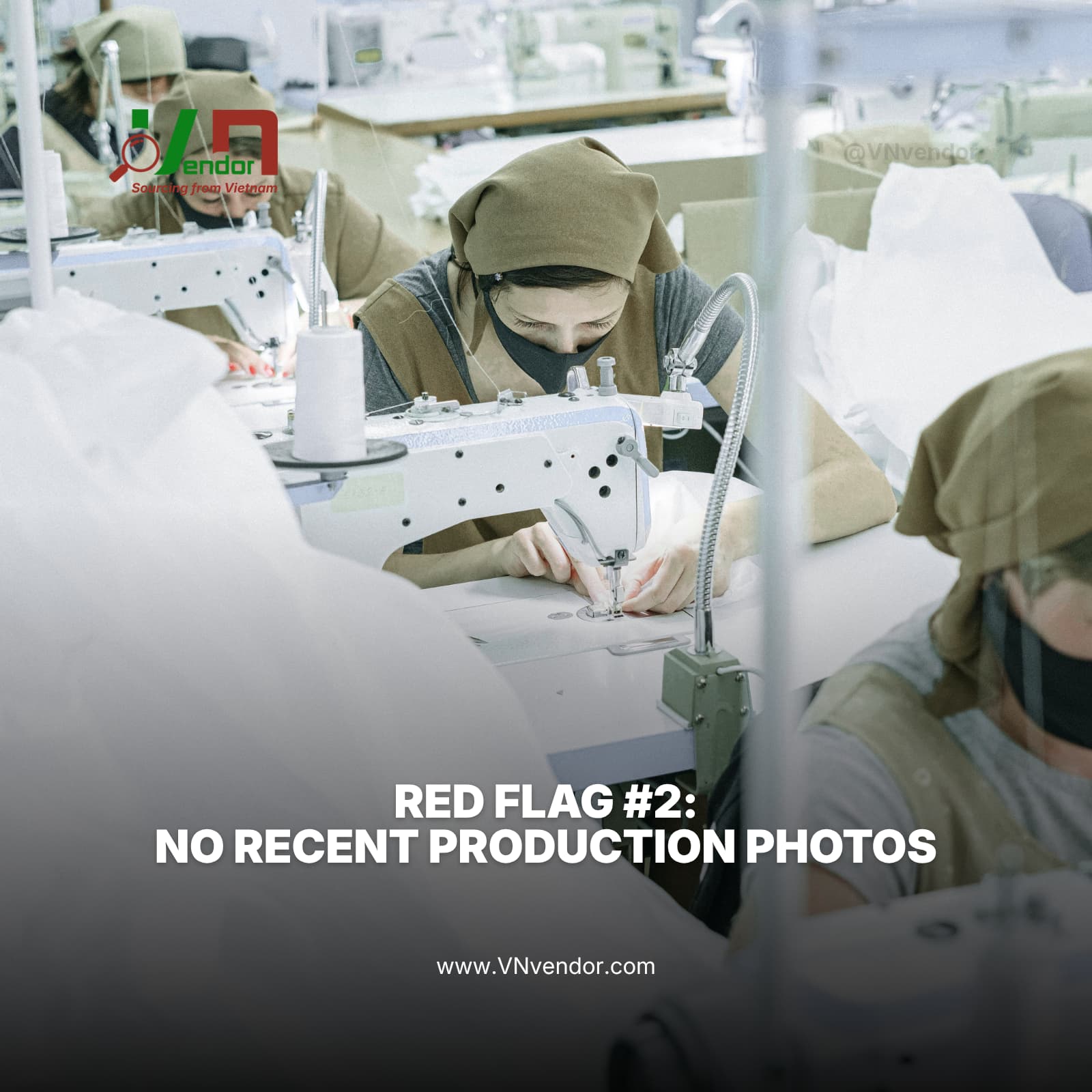
Red Flag #2: No recent production photos
A real Vietnam supplier will gladly share photos of their facility. Silence is a major warning sign. They should proudly show you their machines and workers. If they only send perfect, highly edited catalog images, they might not own a factory at all.
Red Flag #3: Refusing live video tours
If they refuse a live video call, they are hiding something. A genuine factory manager will happily walk the production floor with a smartphone. They will show you the assembly lines in real-time. Refusing a video tour means they likely do not own the factory.

Red Flag #4: Business license does not match
The company name on the business license must exactly match the bank account. Proper business license verification is mandatory. If they ask you to pay a different company name, it is a huge risk. This often leads to payment fraud or unauthorized subcontracting.

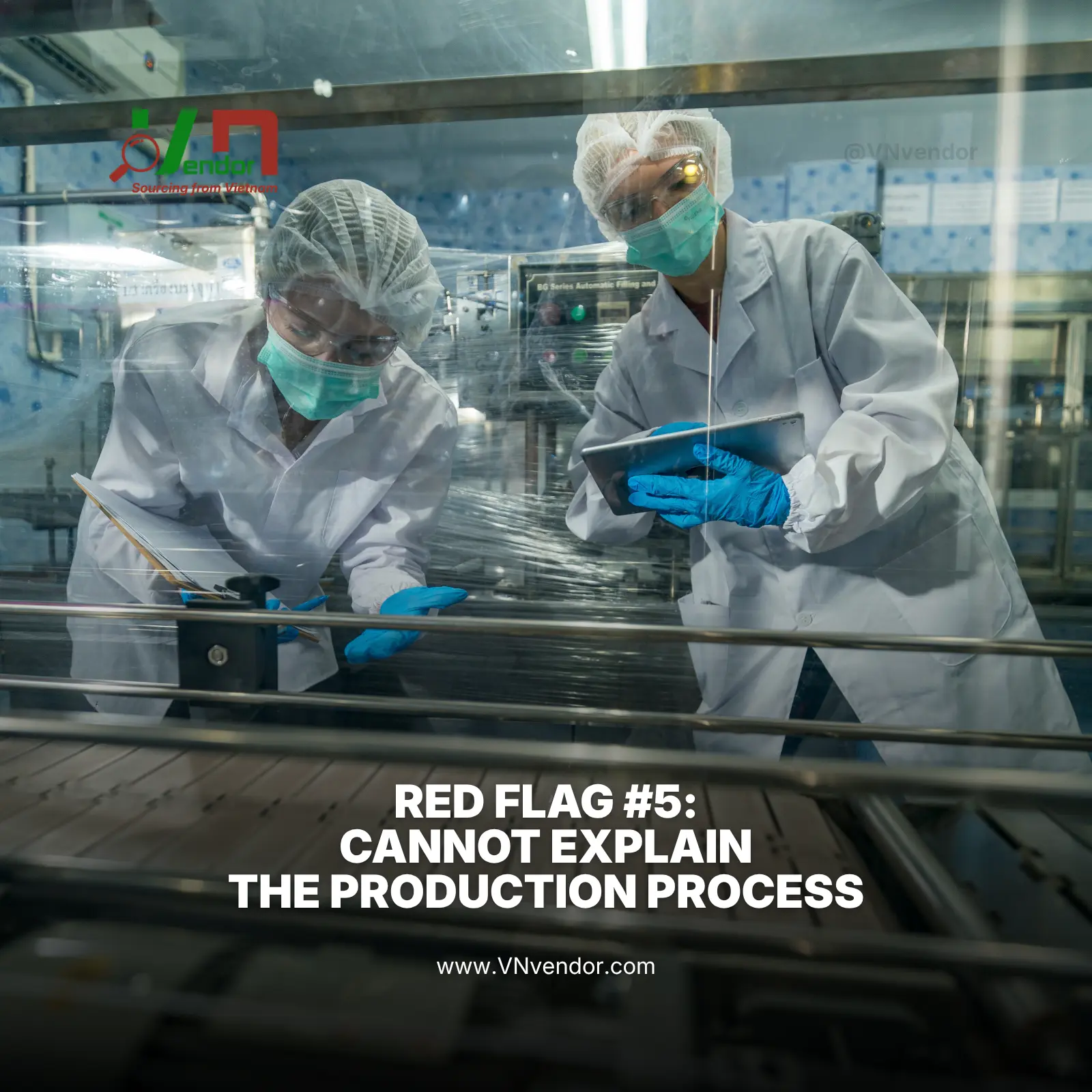
Red Flag #5: Cannot explain the production process
An authentic OEM factory knows their technical process deeply. Talk to them about specific manufacturing steps. If the contact person only talks about price and ignores technical details, beware. They are likely a middleman who does not understand actual production operations.
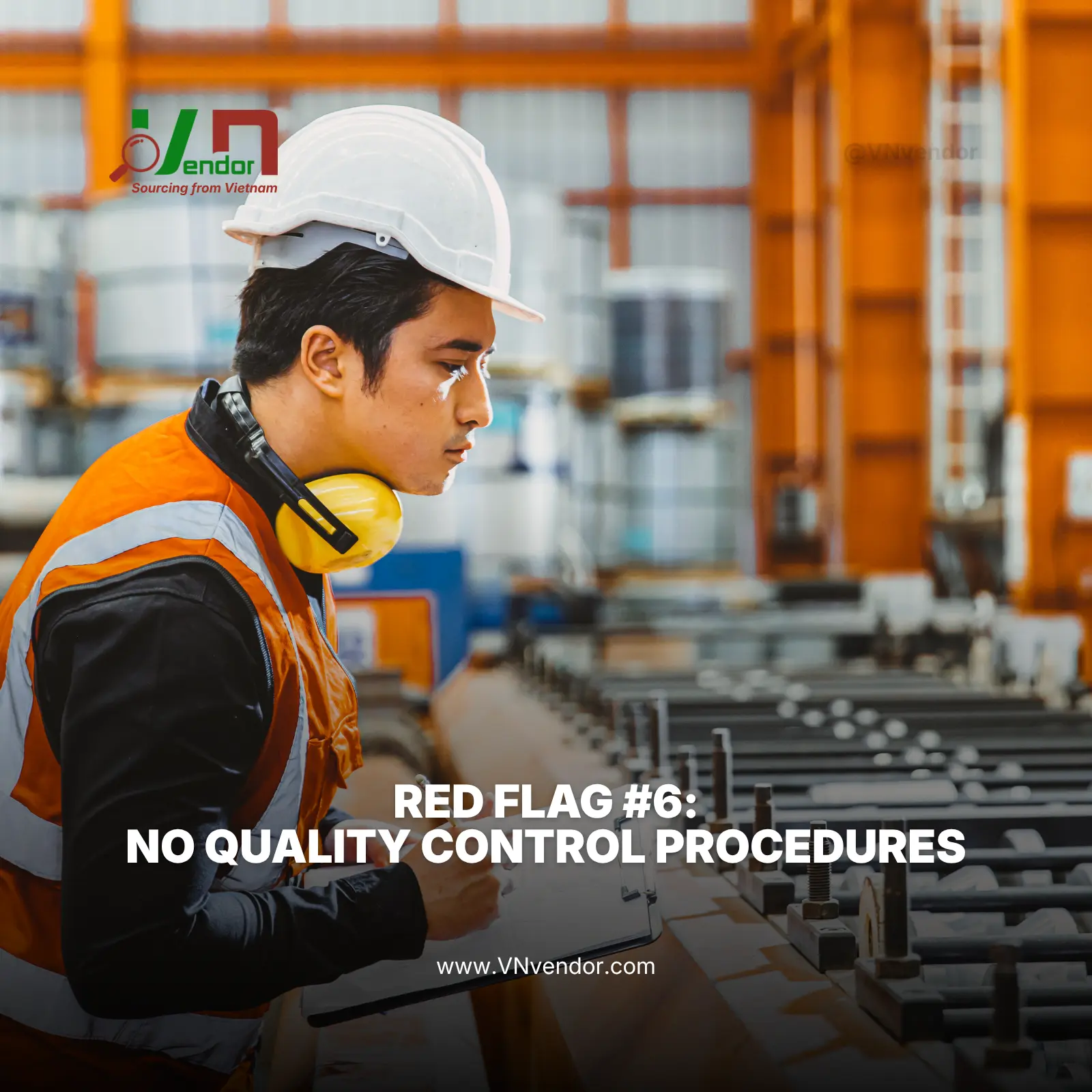
Red Flag #6: No quality control procedures
Without a documented quality control inspection system, every batch will vary. You will face high defect rates. A good factory has clear standard operating procedures. If they cannot show you how they check for defects, do not work with them.
Red Flag #7: No export records
Manufacturing for the domestic market is different from export manufacturing. An experienced export manufacturer understands international packaging and strict customs rules. Ask for proof of past shipments. If they have no overseas customers, your order will be a painful learning experience.
Red Flag #8: Pricing is too low
Prices dramatically lower than competitors are a trap. This usually means hidden quality cuts. They might use inferior materials to save money. Alternatively, they might raise the price right before shipping. Always question pricing that seems too good to be true.
Red Flag #9: No compliance documents
Missing factory certifications are a major risk for international brands. Depending on your industry, they need specific documents. Without these, your goods might be blocked at customs. A real factory keeps their compliance paperwork organized and ready to share.
Red Flag #10: Pressure for early deposits
A reliable manufacturing partner respects your evaluation process. They will not demand money before you finish checking their background. If a supplier aggressively pressures you for a deposit quickly, walk away. Professional factories value long-term partnerships over quick cash.
If you identify more than three of these signs, be careful. Conduct additional research before placing any purchase order.
Step-by-Step: How to Verify a Vietnamese Factory
Here is the exact method for verifying a Vietnamese factory. Follow these steps carefully to ensure a safe sourcing experience.
Step 1: Verify the legal registration
Always start with paperwork. You must check their legal status first. Request their Business Registration Certificate. Ask for their Tax Registration. Confirm their export license. You should translate these documents. This ensures they are registered for manufacturing, not just trading.
Read more: VNvendor | iGreen Solutions Company Limited Tax Code
Step 2: Confirm the physical location
Do not trust a website address blindly. Verify the production facility actually exists. Check Google Maps and satellite images carefully. Ask for street view photos. Check if their warehouse space matches their claimed capacity. A massive capacity claim requires a massive physical building.
Step 3: Verify production capabilities
You need a proper production capability assessment. Count their active production lines. Check the age and condition of their equipment. Verify their true workforce size. Ask how they handle peak season orders. You need to ensure they can handle your volume without subcontracting.
Step 4: Review factory certifications
Certifications prove manufacturing compliance. For general management, look for ISO 9001. For social compliance, check for BSCI, Sedex, or WRAP. For textiles, request OEKO-TEX or GRS. For wood products, ask for FSC. Always verify these certificates directly with the issuing body.
Step 5: Evaluate the quality control system
Review their quality management system thoroughly. Check their incoming material inspection logs. Review their in-line QC process on the floor. Look at their final inspection procedures. Ask about their AQL inspection standards. Request a past QC report from a similar product run.
Step 6: Check export experience
You want a partner who understands international shipping. Check their main export markets. Ask for a past commercial invoice and a packing list. Request a Certificate of Origin. This proves they understand complex customs requirements and strict international packaging standards.
Step 7: Request production samples
Never order mass production without physical samples. Assess the sample quality carefully. Track how long the lead time actually is. Measure their communication speed during this phase. Always request a golden PP sample (Pre-Production sample) before mass production begins.
Step 8: Conduct a factory audit
This step is absolutely crucial. You must know how to audit factory Vietnam. You can do a remote audit via video call. You can hire a third party. However, an on-site factory inspection is always best. Review the resulting factory audit report carefully.
If you use a third-party factory audit, choose reputable inspection companies such as SGS, Bureau Veritas, Intertek, or QIMA for an independent assessment.
Step 9: Interview the supplier
Do not just talk to sales representatives. Talk directly to the factory management team. Ask detailed operational questions. Check their problem-solving skills. Ask to see a Corrective Action Report (CAR) from a past production mistake. See how they handle real manufacturing challenges.
Step 10: Score every supplier
Do not rely on gut feelings. Score every supplier using a structured supplier evaluation matrix. Compare their price, capacity, and risk levels side-by-side. This pre-production assessment lowers your risk. It makes your final sourcing decision logical and data-driven.
The Essential Factory Verification Checklist: Documents
What should be included in a factory verification checklist? You need specific documents. Here is a factory verification checklist every buyer should request.
| Document | Why It Matters | Mandatory? |
|---|---|---|
| Business License | Verifies legal entity | Yes |
| Factory Photos | Confirms production space | Yes |
| Factory Video | Provides visual verification | Yes |
| Product Catalog | Shows manufacturing capability | Yes |
| Certifications | Proves industry compliance | Yes |
| Audit Reports | Shows factory credibility | Yes |
| QC Procedures | Ensures quality assurance | Yes |
| Sample Reports | Proves product quality | Yes |
| Export Documents | Shows international experience | Recommended |
| Customer References | Provides social proof | Recommended |
Critical Questions to Ask When You Verify Vietnam Supplier
Before you sign a contract, you must ask the right questions. These questions help you verify Vietnam supplier credentials effectively.
- Do you own your factory?
- Do you subcontract orders to other facilities?
- What is your actual monthly capacity?
- What is your minimum order quantity (MOQ)?
- Can I schedule a live video audit next week?
- What QC system do you use on the floor?
- Which countries do you currently export to?
- Can I inspect production at any given time?
- Can my team visit the factory next month?
- How many active production lines do you operate?
- How exactly do you handle defective products?
Benefits of Verifying a Vietnamese Factory Before Production
Good sourcing risk management protects your business. Here is how verification impacts your bottom line.
| Benefit | Business Impact |
|---|---|
| Reduce supplier risk | Avoid fraud and scams |
| Better product quality | Fewer product defects |
| Reliable delivery times | Protect your launch schedules |
| Pricing transparency | Reduce hidden production costs |
| Stronger negotiation | Secure better contract terms |
| Easier compliance | Lower import risks at customs |
| Long-term partnerships | Build a stable supply chain |
| Better communication | Faster problem resolution |
What Happens If You Skip Factory Verification?
Supply chain transparency is critical. Here is a comparison of working with verified versus unverified factories.
| Feature | Verified Factory | Not Verified Factory |
|---|---|---|
| Ownership | Confirmed ownership | Unknown ownership |
| Capacity | Verified true capacity | Capacity is uncertain |
| QC System | QC system validated | No QC visibility |
| Risk Level | Lower production risk | Higher defect rates |
| Communication | Clear, honest communication | Frequent misunderstandings |
| Timelines | Reliable production timelines | Frequent severe delays |
| Compliance | Better regulatory compliance | High compliance risks |
| Costs | Lower total landed cost | Hidden extra costs |
Why Companies Choose Vietnam Sourcing Partners
Vietnam has become one of the world’s leading manufacturing and sourcing destinations, supported by a strong export economy, an expanding network of free trade agreements (FTAs), and continued investment in industrial infrastructure.
Organizations such as the World Bank, World Trade Organization (WTO), UNCTAD, and Vietnam’s Ministry of Industry and Trade regularly report Vietnam’s growing role in global supply chains. For international buyers, this creates access to a broad supplier base across industries while increasing the need for careful factory verification and supplier evaluation.
Many brands prefer sourcing from Vietnam with local support. Local knowledge saves weeks of research. You get instant access to verified factory networks.
A partner provides faster factory shortlisting. They handle supplier negotiations in the local language. They conduct audits quickly. This ensures better price benchmarking. It leads to faster issue resolution.
This approach is suitable for first-time importers. It helps buyers manage multiple product categories. It is vital for companies without a local sourcing office.
If you want to learn more about our approach, read about VNvendor sourcing. We help your company transition smoothly.
The Complete Factory Verification Checklist (Printable)
Use this complete factory verification checklist for your next project. It covers all the critical steps for supplier qualification.
| Category | Check | Status |
|---|---|---|
| Legal Registration | □ | |
| Factory Address | □ | |
| Live Video Tour | □ | |
| Production Capacity | □ | |
| Machines & Tools | □ | |
| Workforce Size | □ | |
| Certifications | □ | |
| QC Process | □ | |
| Sample Quality | □ | |
| Communication | □ | |
| Export Experience | □ | |
| Compliance | □ | |
| Audit Completed | □ | |
| References Verified | □ | |
| Pricing Reviewed | □ |
Frequently Asked Questions
How can I verify if a Vietnamese factory is legitimate before placing an order?
You must check their business license and tax code. Request a live video tour. Ask for export records. A legitimate factory will provide these without hesitation.
What documents should a Vietnamese supplier provide for verification?
They should provide a Business Registration Certificate. They need an export license. Ask for ISO or industry certifications. Request past commercial invoices to prove export experience.
How do I audit a factory in Vietnam without visiting in person?
Learning how to audit factory Vietnam remotely is entirely possible. You can request a live video walkthrough. You can also hire a local sourcing partner to visit the facility.
How can I tell if a supplier is a real factory or just a trading company?
Trading companies often refuse video tours of the production floor. They usually offer a very wide variety of unrelated products. Real factories specialize in specific materials and processes.
Should I hire a sourcing company to verify factories in Vietnam?
Yes, especially if you lack a local presence. A sourcing company speaks the language. They understand local business practices. They can visit factories quickly to verify claims.
Can a sourcing company verify factories on my behalf?
Absolutely. A professional sourcing partner handles the entire supplier qualification process. They check licenses, evaluate capacity, and assess quality control systems for your company.
How long does it take to verify a Vietnamese manufacturer?
A basic document verification takes a few days. A full on-site audit takes one to two weeks. It heavily depends on how fast the supplier provides the required documents.
What certifications should I look for when evaluating a Vietnamese factory?
Look for ISO 9001 for general quality. Look for BSCI or Sedex for social compliance. Check for OEKO-TEX for textiles. Look for FSC for wood products.
Is it safe to place an order without conducting a factory audit in Vietnam?
No. Placing an order without an audit is a massive financial risk. You have absolutely no guarantee of their quality, capacity, or safe working conditions.
How much does factory verification in Vietnam cost?
Basic document verification is often inexpensive. A full third-party on-site audit usually costs between $300 and $600. It is a small price to protect your large order.
Is factory verification worth it for small and mid-size importers?
Yes. Smaller companies cannot afford to lose their initial deposit. Verification protects your limited capital. It ensures you receive products you can actually sell.
What is the difference between supplier verification and a factory audit?
Verification is checking documents and basic facts. An audit is a deep inspection. An audit checks the actual production lines and quality systems in person.
Can one sourcing partner help verify factories across multiple industries in Vietnam?
Yes. A strategic sourcing ecosystem has experts in different manufacturing fields. They can vet Vietnamese factories for apparel, furniture, and packaging simultaneously.
Final Thoughts
Verifying factories is much cheaper than fixing production problems later. A structured process helps your company reduce sourcing risk. It improves product quality. It helps you build reliable supplier relationships.
You might handle this yourself. You might work with a trusted sourcing partner. Either way, following a standardized checklist improves your outcomes. Take the time to evaluate your partners carefully.
Now you know exactly how to verify a Vietnamese factory.

